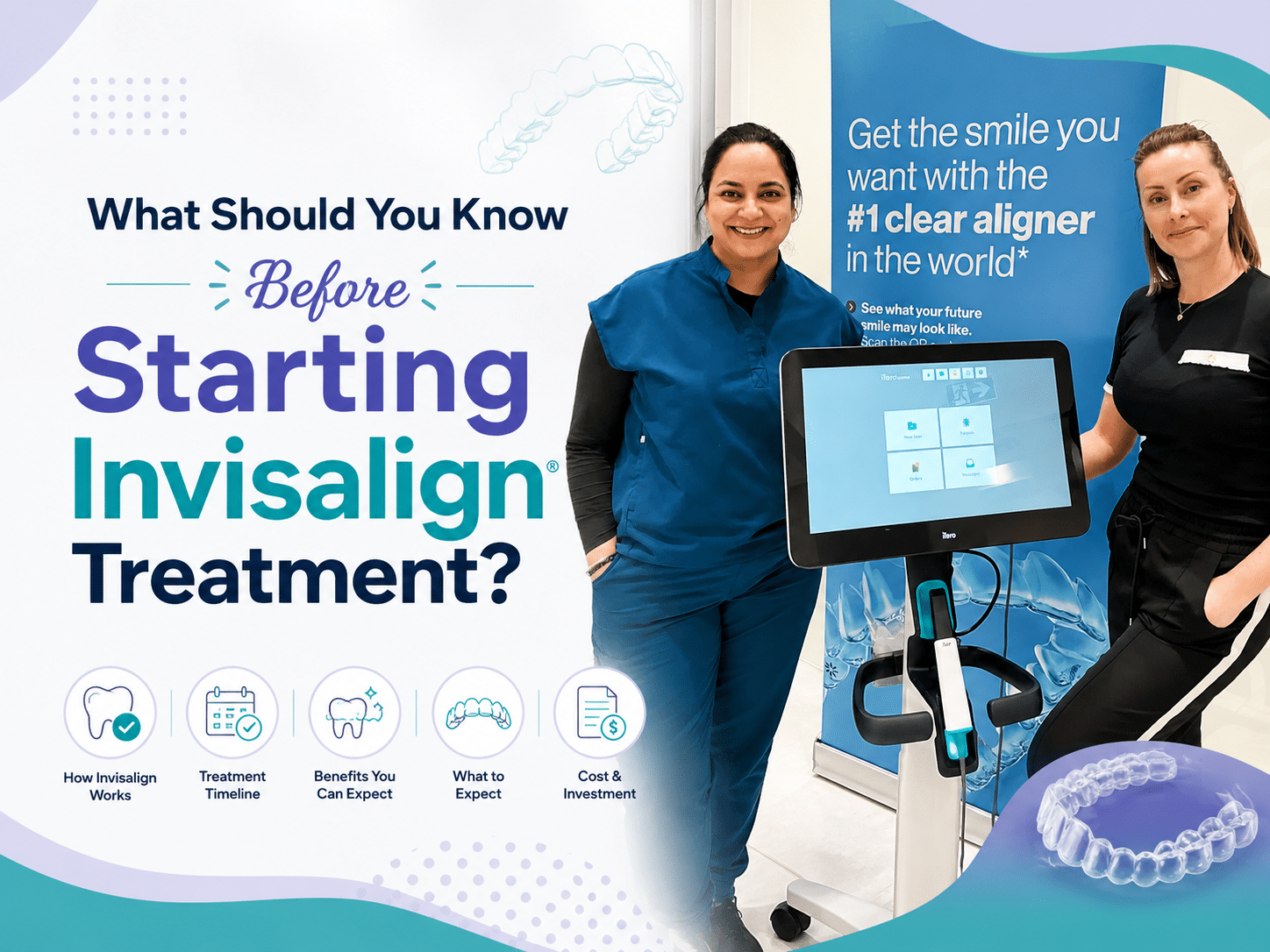
What Should You Know Before Starting Invisalign Treatment?
Table of Contents
- What Is Invisalign?
- How Clear Aligners Work
- Who May Benefit From Invisalign
- Daily Habits That Affect Results
- What to Expect During Treatment
- Invisalign vs Traditional Braces
- Questions to Ask Before Starting
- Understanding Long-Term Oral Health Benefits
- Supporting Healthy and Confident Smiles
- FAQs
What Is Invisalign?
Invisalign is an orthodontic treatment that uses a series of clear aligners to gradually move teeth into better alignment. The aligners are custom-made to fit comfortably over the teeth and are replaced every few weeks as treatment progresses. Many patients prefer clear aligners because they are less noticeable than traditional braces and can be removed while eating, brushing, and flossing. Treatment plans vary depending on the position of the teeth, bite alignment, and overall oral health needs.How Clear Aligners Work
Clear aligners apply gentle pressure to slowly guide teeth into their planned positions. Each set of aligners is designed to create small movements over time. Patients typically wear aligners for most of the day and remove them only during meals or oral hygiene routines. Consistency matters because wearing aligners as instructed helps maintain steady progress throughout treatment. Many patients considering invisible braces Orangeville want a treatment option that feels more flexible and comfortable during everyday activities.Who May Benefit From Invisalign?
Invisalign may help patients with:- Mild crowding
- Gaps between teeth
- Bite alignment concerns
- Crooked teeth
- Minor spacing issues
Daily Habits That Affect Results
Successful treatment depends heavily on daily habits and consistency. Aligners should be cleaned regularly to help maintain good oral hygiene and prevent staining or odor buildup. Patients also need to brush and floss before placing aligners back into the mouth after eating. Poor oral hygiene during treatment may increase the risk of cavities or gum irritation. Wearing aligners for the recommended number of hours each day is also important for keeping treatment on schedule.What to Expect During Treatment
Most patients begin with a consultation and digital scans to evaluate tooth positioning and treatment goals. A personalized treatment plan is then created to guide tooth movement gradually over time. Common Stages of Invisalign Treatment| Treatment Stage | What Happens |
|---|---|
| Initial consultation | Teeth and bite are evaluated |
| Digital scanning | Images help create aligners |
| Aligner fitting | First aligners are provided |
| Progress monitoring | Teeth movement is checked regularly |
| Final retention phase | Retainers help maintain results |
Invisalign vs Traditional Braces
Both Invisalign and traditional braces aim to improve tooth alignment and bite function. However, there are some important differences between the two options. Clear aligners are removable, while braces stay attached to the teeth throughout treatment. Invisalign also allows patients to continue eating most foods without major restrictions. Traditional braces may still be recommended for more severe orthodontic concerns or complex bite corrections. Choosing the right treatment depends on oral health needs, lifestyle, and treatment goals.Questions to Ask Before Starting Treatment
Before beginning orthodontic care, patients should understand the treatment process, expected timeline, and daily responsibilities. Helpful Questions to Consider- How long may treatment take?
- How often are follow-up visits needed?
- Are retainers required after treatment?
- What habits can affect results?
- How should aligners be cleaned properly?
Understanding Long-Term Oral Health Benefits
Straighter teeth can improve more than appearance alone. Proper alignment may also support easier brushing and flossing, helping reduce plaque buildup and oral hygiene challenges. Better bite alignment can sometimes lower uneven pressure on teeth and reduce strain during chewing. Many patients also feel more confident smiling and speaking comfortably after orthodontic treatment. Some people searching for the best Invisalign dentist Orangeville want guidance that balances comfort, personalized care, and long-term oral health support throughout treatment.Supporting Healthy and Confident Smiles
Orthodontic treatment is an important step toward improving both oral health and smile confidence. At Toothbuds Dentistry, we focus on personalized care, patient comfort, and clear communication throughout every stage of treatment. Whether patients are exploring clear aligners for the first time or learning more about their orthodontic options, our team is here to support long-term oral health with compassionate and professional dental care.FAQs
1. How long does Invisalign treatment usually take?
Treatment length depends on tooth alignment and individual orthodontic needs. Some patients may complete treatment within several months, while others may require longer care for more complex adjustments.2. Does Invisalign hurt?
Most patients experience mild pressure when starting a new set of aligners. This feeling is usually temporary and often improves within a few days as the teeth adjust.3. Can I eat while wearing aligners?
Aligners should be removed during meals and snacks. Removing them helps prevent staining, damage, and food buildup while allowing patients to eat more comfortably.4. How many hours should aligners be worn daily?
Patients are typically advised to wear aligners for most of the day to support steady tooth movement. Consistency plays an important role in achieving successful treatment results.5. Are clear aligners noticeable?
Clear aligners are designed to fit closely over the teeth and are usually less noticeable than traditional braces. Many patients choose them for a more discreet orthodontic option.6. Do I still need dental cleanings during treatment?
Yes. Regular dental visits remain important during orthodontic care. Professional cleanings and oral exams help maintain healthy teeth and gums throughout treatment.7. What happens after Invisalign treatment ends?
Many patients receive retainers after treatment to help maintain their new tooth positions. Wearing retainers as instructed can help prevent teeth from shifting over time.
Dr. Kaur, a General Dentist, has been enriching the field of dentistry with her expertise for over 13 years, having obtained her license in Canada in 2015. A holder of a BDS degree, Dr. Kaur’s proficiency spans a wide array of dental services, including General and Cosmetic Dentistry, Wisdom Teeth Extractions, Invisalign, and more. Her commitment to her craft is further evidenced by her memberships in prestigious organizations like the Ontario Dental Association, the Academy of General Dentistry, and the Royal College of Dental Surgeons of Ontario.
Renowned for her patient-focused approach, Dr. Kaur emphasizes the importance of listening and customizing treatments to meet individual needs, viewing dentistry not only as a science but also as an art form dedicated to enhancing and restoring smiles. Her dedication to ongoing education ensures she remains at the cutting edge of dental advancements.
Outside her professional life, Dr. Kaur enjoys family time, travel, and cinema, adding a relatable and approachable dimension to her persona. She is passionate about delivering professional and quality dental care, driven by her desire to connect with people and address their dental needs effectively.
Dr. Kaur’s journey in dentistry serves as an inspiration for aspiring dental professionals, advocating determination, motivation, and enjoyment in their work. Follow her journey and professional updates on Instagram @drprabh84, where she continues to inspire both her patients and peers in the dental community.