What to Know Before Getting Help With a TMJ Issue in Orangeville
Table of Contents
- What Is TMJ and Why Does It Matter?
- What Should You Look for in a TMJ Provider?
- Which TMJ Symptoms Should You Take Seriously?
- How Is a TMJ Problem Evaluated?
- Why Does Personalized Care Matter?
- Can TMJ Problems Cause Headaches?
- What Can You Expect During Your Visit?
- How Can You Prepare for Your Appointment?
- Why Choose Toothbuds Dentistry for TMJ Care?
- Connect With Toothbuds Dentistry
- Frequently Asked Questions
What Is TMJ and Why Does It Matter
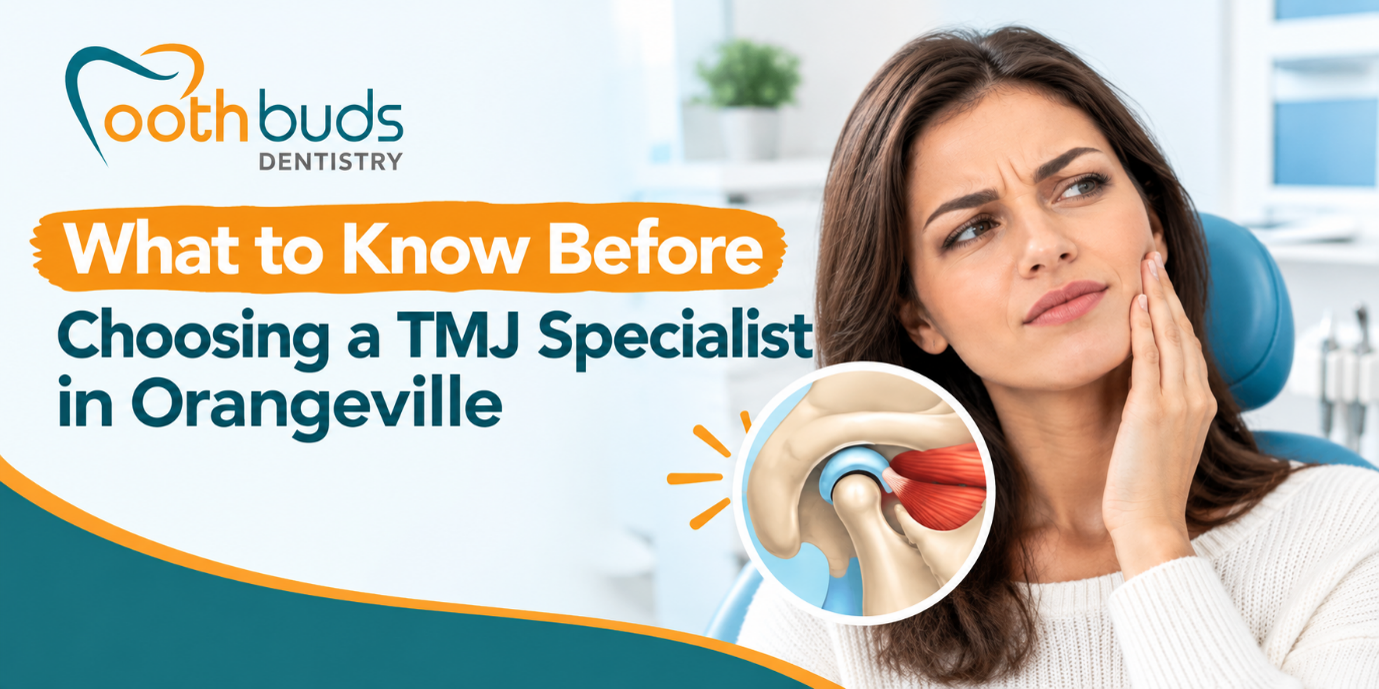
The Temporomandibular Joint connects your jaw to your skull. You have one joint on each side of your face. These joints help you talk, chew, yawn, and open and close your mouth. Because you use them throughout the day, even a small problem can become noticeable. TMJ concerns can affect the joint, surrounding muscles, or the way your jaw moves. Teeth grinding and clenching can also place extra pressure on these areas. That is why we do not look at jaw pain as an isolated problem. We want to understand the bigger picture.What Should You Look for in a TMJ Provider
Choosing the right dental professional is about more than finding someone who offers TMJ care. You should feel comfortable asking questions. You should also receive a clear explanation of what may be causing your symptoms and what your options are. At Toothbuds Dentistry, we believe every patient deserves time, attention, and honest guidance. We do not want you to feel rushed into a decision. Here are a few things we recommend considering:- A thorough evaluation: Your provider should look at your jaw movement, symptoms, bite, and surrounding areas instead of focusing on one complaint.
- Clear communication: You should understand what your symptoms may mean and why a particular care option is being recommended.
- Personalized attention: Jaw problems can look different from one person to another. Your care should reflect your symptoms and needs.
- A patient-focused approach: You should feel heard and respected throughout the process, especially if pain or headaches have been affecting your daily life.
Which TMJ Symptoms Should You Take Seriously
TMJ problems do not always feel the same. Some people notice jaw pain, while others first notice headaches or changes when they chew. You may experience:- Jaw clicking or popping
- Pain around the jaw
- Difficulty opening your mouth
- A jaw that feels stiff or tired
- Pain while chewing
- Frequent headaches
- Earaches or a feeling of fullness
- Ringing in the ears
- Teeth clenching or grinding
- Jaw locking or limited movement
How Is a TMJ Problem Evaluated
There is no single symptom that confirms a TMJ disorder. That is why we start by listening. We ask about your symptoms, when they started, what makes them worse, and whether you notice clenching, grinding, headaches, or jaw tension. We also assess how your jaw moves and look for signs that may point to a joint or muscle-related concern. Modern dental technology such as a CBCT scan and the iTero scanner, can also support a more detailed evaluation when appropriate. The goal is not to assume the cause. It is to gather the right information and explain what we find.Why Does Personalized Care Matter
Two people can have similar jaw symptoms but very different reasons behind them. One person may have frequent clenching. Another may notice symptoms after an injury. Someone else may have muscle tension or changes in how the jaw functions. This is why we avoid a one-size-fits-all approach. At Toothbuds Dentistry, we take the time to understand your concerns before discussing your options. We want you to know what we are looking at, why it matters, and what the next step may involve. That conversation is an important part of good dental care.Can TMJ Problems Cause Headaches
They can be associated with headaches in some people. The jaw muscles and joints are located close to areas around the temples, face, and head. When these muscles are tense or the jaw is under extra strain, some patients may experience headaches. However, headaches can have many causes. We do not assume that every headache comes from the jaw. If your symptoms suggest a connection, we can assess your jaw and discuss whether TMJ-focused care may be appropriate. This is also why searching for TMJ headache treatment in Orangeville should not be only about finding a quick solution. A proper evaluation matters.What Can You Expect During Your Visit
We want your appointment to feel straightforward and comfortable. Your first visit is an opportunity to talk about what you have been experiencing. We will ask questions and assess your jaw, muscles, bite, and movement as needed. From there, we can explain our findings in simple terms. The process may include:- Discuss your symptoms: We learn about your pain, headaches, jaw sounds, grinding, clenching, and other concerns.
- Evaluate your jaw: We look at movement, function, and areas that may be contributing to your symptoms.
- Discuss your options: We explain what we found and talk through appropriate care based on your individual needs.
- Plan the next step: If further assessment or another type of dental care is needed, we explain what that may involve.
How Can You Prepare for Your Appointment
A little preparation can make your visit more useful. Think about when your symptoms started and whether they happen at certain times. You may also want to notice if stress, chewing, waking up, or clenching seems to make them worse. You can also write down questions before your appointment. Most importantly, tell us about all the symptoms you have noticed. A headache may seem unrelated to jaw pain, but that information can still be useful during an evaluation.Why Choose Toothbuds Dentistry for TMJ Care
At Toothbuds Dentistry, we understand that ongoing jaw discomfort can affect everyday life. Eating, speaking, sleeping, and even relaxing can become difficult when your jaw does not feel right. We take those concerns seriously. Our approach is centered on careful evaluation, patient education, and personalized care. We want to help you understand what may be happening rather than simply focusing on one symptom. Our Orangeville practice also welcomes new patients and offers a range of dental services under one roof. That allows us to consider your oral health as a whole when discussing your concerns. If you are looking for TMJ therapy in Orangeville, we encourage you to start with a conversation. The right care begins with understanding your symptoms.Connect With Toothbuds Dentistry
You do not have to keep guessing why your jaw hurts or why headaches keep returning. At Toothbuds Dentistry, we are here to listen, evaluate your concerns, and help you understand your options. We take a personalized approach because your symptoms and needs are unique. If you are experiencing jaw pain, clicking, headaches, grinding, or difficulty moving your jaw, contact Toothbuds Dentistry at (519) 307-7575 to schedule an appointment in Orangeville. We would be happy to discuss your concerns and help you take the next step toward better oral health and comfort.Frequently Asked Questions
1. What does a dentist that offers TMJ treatment do?
A TMJ dental provider evaluates jaw pain, clicking, limited movement, muscle tension, grinding, and related symptoms to determine possible causes and appropriate care.2. How do I know if I need TMJ care?
You may benefit from an evaluation if jaw pain, clicking, headaches, stiffness, grinding, or limited movement continues or interferes with eating and daily activities.3. Can TMJ problems cause headaches?
TMJ problems may contribute to headaches in some people, particularly when jaw muscles are tense. However, headaches have many possible causes and require proper evaluation.4. What happens during a TMJ evaluation?
We discuss your symptoms, examine jaw movement and function, consider contributing factors, and explain our findings. If needed, we discuss additional assessment or appropriate care options.5. Can TMJ problems go away on their own?
Some mild jaw symptoms may improve, but persistent pain, locking, swelling, or limited movement should be evaluated rather than ignored or allowed to worsen.
Dr. Kaur, a General Dentist, has been enriching the field of dentistry with her expertise for over 13 years, having obtained her license in Canada in 2015. A holder of a BDS degree, Dr. Kaur’s proficiency spans a wide array of dental services, including General and Cosmetic Dentistry, Wisdom Teeth Extractions, Invisalign, and more. Her commitment to her craft is further evidenced by her memberships in prestigious organizations like the Ontario Dental Association, the Academy of General Dentistry, and the Royal College of Dental Surgeons of Ontario.
Renowned for her patient-focused approach, Dr. Kaur emphasizes the importance of listening and customizing treatments to meet individual needs, viewing dentistry not only as a science but also as an art form dedicated to enhancing and restoring smiles. Her dedication to ongoing education ensures she remains at the cutting edge of dental advancements.
Outside her professional life, Dr. Kaur enjoys family time, travel, and cinema, adding a relatable and approachable dimension to her persona. She is passionate about delivering professional and quality dental care, driven by her desire to connect with people and address their dental needs effectively.
Dr. Kaur’s journey in dentistry serves as an inspiration for aspiring dental professionals, advocating determination, motivation, and enjoyment in their work. Follow her journey and professional updates on Instagram @drprabh84, where she continues to inspire both her patients and peers in the dental community.