What Causes Jaw Pain and When Should You Seek Treatment?
Table of Contents
- What causes jaw pain?
- What are the common signs of TMJ disorders?
- When Should You Seek Jaw Pain Treatment in Orangeville?
- How Long Should You Wait?
- How do we assess jaw pain?
- What does jaw disorder treatment involve?
- Why Is Early Assessment Helpful?
- What Can You Do to Protect Your Jaw?
- Why Choose Toothbuds Dentistry for TMJ Care?
- Frequently Asked Questions
What causes jaw pain
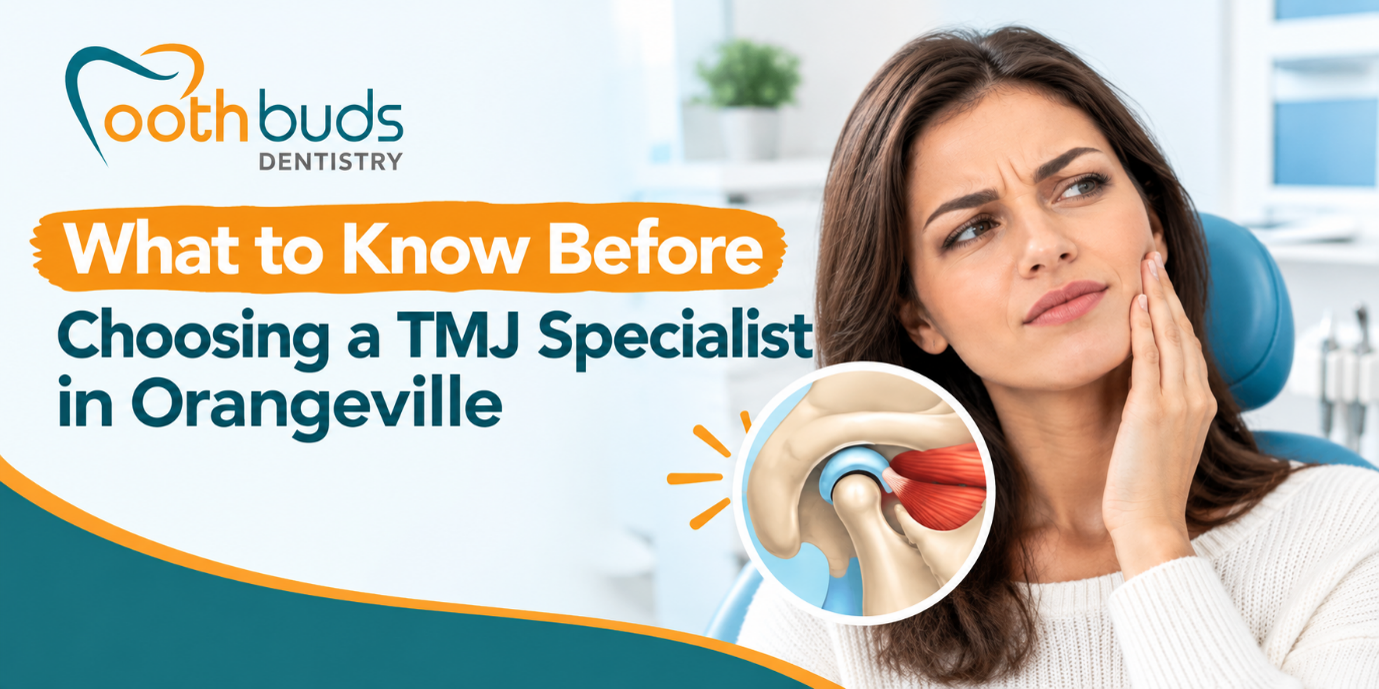
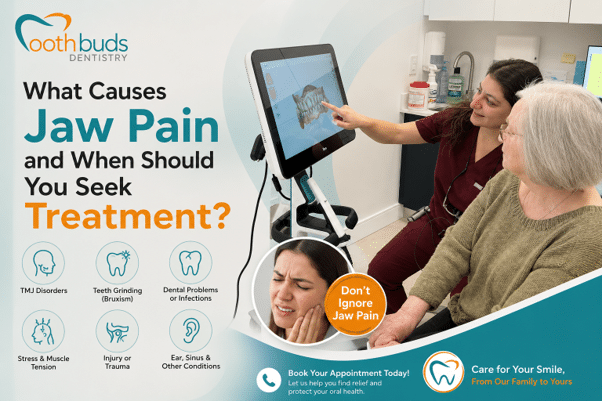
Jaw pain can have several causes. It does not always come from the jaw joint itself. The temporomandibular joints connect your jaw to your skull. These joints help you chew, speak, and open your mouth. Problems with these joints or the muscles around them can cause pain and limited movement. Teeth grinding and jaw clenching can also place extra pressure on the jaw muscles and joints. Dental problems can sometimes cause pain that feels like it is coming from the jaw. An injury can also affect the jaw. In other cases, pain may develop without an obvious injury. This is why we do not recommend guessing the cause based on pain alone. A proper dental assessment can help us understand what is happening.What are the common signs of TMJ disorders
TMJ problems can cause more than jaw pain. Some symptoms may appear in nearby areas. At Toothbuds Dentistry, we pay close attention to symptoms such as headaches, ear discomfort, ringing in the ears, jaw clicking, jaw popping, clenching, grinding, and pain in the chewing muscles. Limited mouth opening and jaw movement to one side can also be signs that the jaw needs attention. Which Symptoms Should You Not Ignore? Some signs deserve a closer look, especially when they continue or become worse.- Pain while chewing: Ongoing pain during meals may point to an issue involving the jaw joint or chewing muscles. It can also make every day eating harder.
- Clicking or popping: Occasional sounds may not always mean there is a serious problem. However, repeated sounds with pain or limited movement should be assessed.
- Jaw locking: A jaw that locks open or closed can interfere with normal movement. We recommend having this symptom checked rather than ignoring it.
- Headaches or ear symptoms: Jaw problems may occur with headaches, ear discomfort, or ringing. We consider these symptoms when assessing possible TMJ concerns.
- Limited mouth opening: Difficulty opening your mouth normally can affect eating, speaking, and dental care. It may be a reason to seek an assessment.
When Should You Seek Jaw Pain Treatment in Orangeville
You should consider an assessment when jaw pain does not settle, keeps returning, or begins affecting daily activities. You should also seek care when you notice significant changes in how your jaw moves. Pain with chewing, repeated clicking or popping, jaw locking, or difficulty opening your mouth should not be ignored. If you have sudden or severe dental pain, swelling, or another urgent dental concern, prompt dental care is important. At Toothbuds Dentistry, we also welcome dental emergencies and offer emergency appointments in Orangeville.How Long Should You Wait
There is no single waiting period that works for everyone. Mild discomfort after temporary strain may improve. However, ongoing or recurring pain deserves attention. The important point is to notice changes. If your pain is affecting your normal routine, it is reasonable to arrange a dental assessment.How do we assess jaw pain?
We start by listening to your symptoms and understanding what you have been experiencing. We may ask about pain, jaw movement, chewing, clenching, grinding, headaches, and other related symptoms. We also look at how your jaw functions during an examination. At Toothbuds Dentistry, we use modern dental equipment to help patients understand their dental concerns. Our practice uses tools such as an iTero scanner and intraoral cameras as part of our modern approach to dental care. Our goal is not to make assumptions. We want to understand your concerns and guide you toward an appropriate next step.What does jaw disorder treatment involve?
Jaw disorder treatment depends on the cause and your symptoms. There is no single solution that works for every person. The first step is understanding the problem. We focus on your individual needs and discuss the findings with you. This helps you understand what may be contributing to your discomfort and what options may be appropriate.Why Is Early Assessment Helpful
Early assessment gives you a clearer understanding of your symptoms. It can also help you avoid simply living with recurring discomfort. When jaw pain affects chewing, speaking, sleep, or daily activities, it deserves attention. At Toothbuds Dentistry, patient education is an important part of our approach. We want our patients to understand their oral health and feel informed about their care.What Can You Do to Protect Your Jaw
Small daily habits may help reduce unnecessary stress on your jaw. If you notice clenching or grinding, pay attention to when it happens. Try to avoid habits that place extra strain on the jaw. If you already have jaw pain, do not ignore changes in your symptoms. Keep track of when the pain appears and what makes it better or worse. What Should You Do When Jaw Pain Starts?- Notice the symptoms: Pay attention to pain, clicking, popping, locking, headaches, ear symptoms, and changes in jaw movement.
- Avoid extra strain: Be mindful of clenching, grinding, and habits that make your jaw work harder than necessary.
- Arrange an assessment: If symptoms continue, return, or affect daily activities, speak with a dental professional about your concerns.
- Follow your care plan: Once the cause has been assessed, follow the recommendations discussed with your dental team
Why Choose Toothbuds Dentistry for TMJ Care
When searching for a TMJ specialist in Orangeville, it is important to choose a dental team that takes your symptoms seriously and looks at your individual needs. At Toothbuds Dentistry, TMJ care is part of our comprehensive dental services. Our team has experience caring for patients with symptoms such as headaches, migraines, jaw pain, clicking, popping, locking, and related neck or shoulder discomfort. Dr. Kaur has more than 15 years of professional dental experience and continues to take part in dental education programs. She is also a member of the Royal College of Dental Surgeons of Ontario, the Canadian Dental Association, and the Ontario Dental Association. We also use modern equipment to support our approach to dental care. Most importantly, we take time to listen, explain, and help our patients understand their oral health.Frequently Asked Questions
1. What is the most common cause of jaw pain?
Jaw pain can result from TMJ disorders, clenching, grinding, muscle strain, dental problems, or injury. An assessment can help determine which cause may be affecting you.2. When should I see a dentist for jaw pain?
See a dentist when jaw pain continues, returns often, affects chewing, limits mouth opening, causes locking, or occurs with persistent clicking, headaches, or ear symptoms.3. Can TMJ cause headaches?
Yes. TMJ related problems can occur with headaches and other symptoms around the head, ears, neck, and shoulders. A dental assessment can help evaluate possible jaw involvement.4. Can jaw pain go away on its own?
Some mild jaw discomfort may improve. However, persistent or recurring pain should be assessed. Ongoing symptoms may indicate an underlying issue that needs professional attention.5. What happens during a TMJ assessment?
We discuss your symptoms, examine your jaw function, and consider related concerns such as pain, clicking, grinding, clenching, and limited movement before discussing appropriate next steps.6. Can jaw disorders affect eating?
Yes. Jaw pain, limited movement, clicking, or locking can make chewing uncomfortable. If eating becomes difficult because of jaw symptoms, we recommend arranging an assessment.
Dr. Kaur, a General Dentist, has been enriching the field of dentistry with her expertise for over 13 years, having obtained her license in Canada in 2015. A holder of a BDS degree, Dr. Kaur’s proficiency spans a wide array of dental services, including General and Cosmetic Dentistry, Wisdom Teeth Extractions, Invisalign, and more. Her commitment to her craft is further evidenced by her memberships in prestigious organizations like the Ontario Dental Association, the Academy of General Dentistry, and the Royal College of Dental Surgeons of Ontario.
Renowned for her patient-focused approach, Dr. Kaur emphasizes the importance of listening and customizing treatments to meet individual needs, viewing dentistry not only as a science but also as an art form dedicated to enhancing and restoring smiles. Her dedication to ongoing education ensures she remains at the cutting edge of dental advancements.
Outside her professional life, Dr. Kaur enjoys family time, travel, and cinema, adding a relatable and approachable dimension to her persona. She is passionate about delivering professional and quality dental care, driven by her desire to connect with people and address their dental needs effectively.
Dr. Kaur’s journey in dentistry serves as an inspiration for aspiring dental professionals, advocating determination, motivation, and enjoyment in their work. Follow her journey and professional updates on Instagram @drprabh84, where she continues to inspire both her patients and peers in the dental community.