5 Dental Problems That May Lead to Tooth Extraction in Orangeville
Table of Contents
- Major Health Conditions Requiring Tooth Removal
- The Clinical Procedure: What to Expect Step by Step
- Essential Post-Care Practices for Complete Recovery
- Schedule Your Comprehensive Dental Evaluation
- Frequently Asked Questions
Major Health Conditions Requiring Tooth Removal
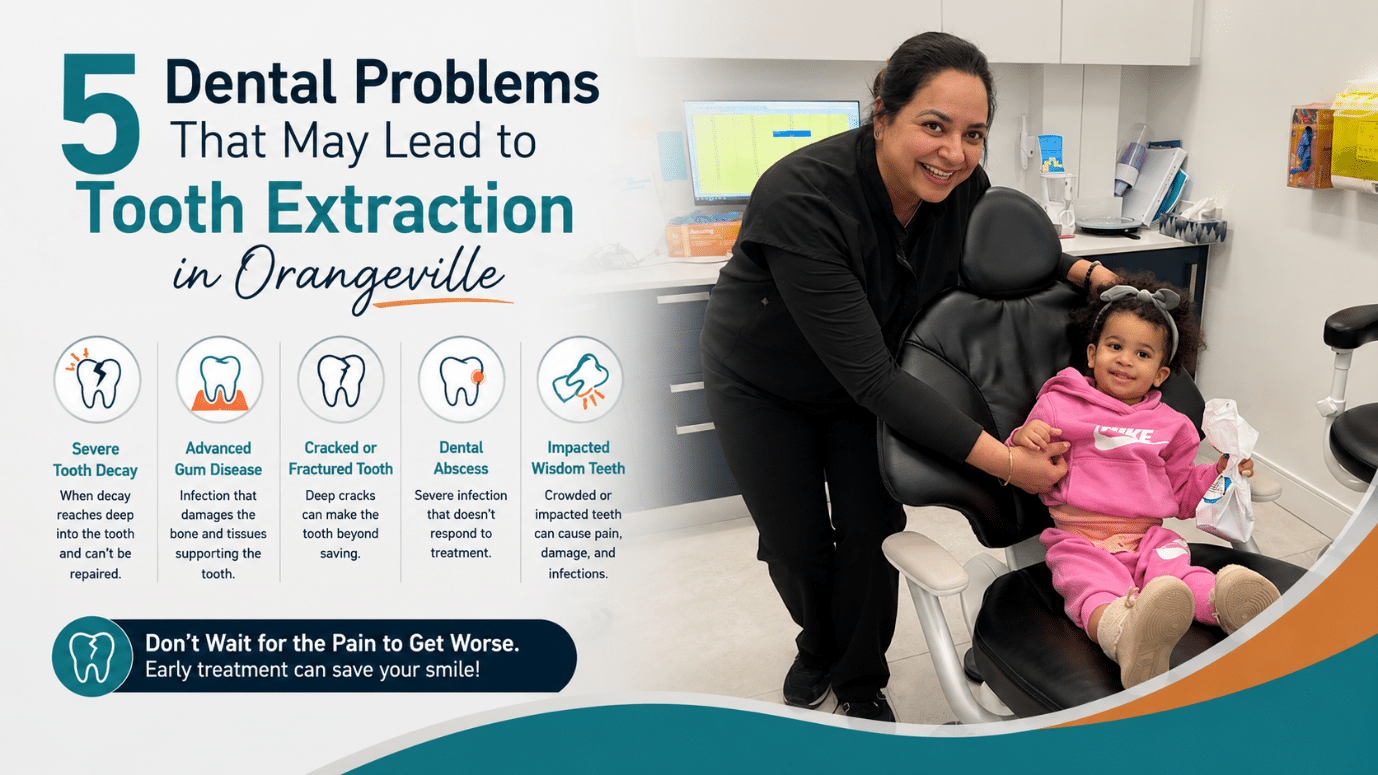
When oral issues progress past a certain point, keeping the tooth can cause widespread inflammation. We always evaluate your unique structure to determine if a therapeutic removal is necessary to restore your peace of mind.- Untreated Deep Bacterial Cavities: When a cavity travels through the enamel and reaches the inner pulp, it causes severe nerve pain. If root canal therapy cannot save the tooth structure, our team may recommend an extraction to stop the infection from traveling deep into your jaw.
- Advanced Structural Periodontal Disease: Chronic gum infections slowly destroy the underlying bone tissue and delicate ligaments that lock your roots in place. As this foundational support erodes, your teeth become loose and unstable, making routine chewing highly uncomfortable.
- Impacted and Misaligned Wisdom Teeth: Third molars frequently lack the physical space needed to emerge normally through the gum tissue. These trapped structures can press tightly against your healthy molars, causing fluid-filled cysts, chronic alignment issues, or recurring local infections.
The Clinical Procedure: What to Expect Step by Step
Undergoing a therapeutic removal is a highly structured medical procedure focused completely on maintaining your physical comfort. We utilize modern diagnostic tools to plan each stage before your appointment begins.- Digital Diagnostic Imaging: We take high-resolution x-rays to map out your complex root shapes and examine the surrounding bone density.
- Local Anesthetic Application: We apply powerful numbing agents to ensure you experience a pressure-only sensation throughout the entire appointment.
- Careful Tooth Loosening: We use specialized clinical tools to slowly separate the tooth from its supporting ligament fibers.
- Protective Hemostasis Maintenance: We place sterile cotton gauze over the empty socket to encourage a natural protective blood clot to form safely
Essential Post-Care Practices for Complete Recovery
Allowing your jaw tissue to heal correctly requires following specific personal guidelines at home. Our administrative team provides full physical instructions so you can heal quickly without experiencing preventable setbacks.- Protect the Initial Blood Clot: Avoid using drinking straws, smoking tobacco, or spitting aggressively for at least 48 hours. These forceful actions can dislodge the healing clot and trigger a painful condition called dry socket.
- Embrace a Soft Food Diet: Consume nutritious options like lukewarm soups, smoothies, yogurt, and mashed potatoes during your first few days. Keep all food items away from the active side of your mouth while chewing.
- Manage Local Tissue Swelling: Apply a cloth-covered ice pack to the outside of your cheek for 10 minutes at a time. This simple step minimizes facial inflammation and numbs the area naturally.
Schedule Your Comprehensive Dental Evaluation
We believe that your long-term comfort and bodily health are the absolute priorities of modern dentistry. Our dedicated professionals focus on providing customized care in a welcoming, clean, and completely supportive environment. If you are struggling with severe oral pain or want to meet with a dedicated extraction dentist in Orangeville, our warm team is ready to guide you. Contact Toothbuds Dentistry today by calling 519-307-7575 to book your appointment.Frequently Asked Questions
1. Does getting a tooth pulled hurt?
No, we utilize advanced numbing technology to ensure you remain fully comfortable during the procedure. You will only feel a mild, completely manageable pressure as we gently loosen the structure.2. How long does the extraction socket take to heal?
The raw gum tissue typically closes over the empty socket within two to three weeks. However, the underlying jawbone can take several months to remodel completely and heal fully.3. Can I return to work right after my extraction appointment?
We recommend taking it easy for the remainder of the day to let your body rest. Avoid heavy physical lifting or strenuous gym workouts for at least 48 hours.4. What happens if a missing tooth is left unreplaced?
Leaving an empty space can cause your surrounding teeth to slowly tilt and shift out of alignment. This movement changes your biting mechanics and can trigger chronic jaw joint strain.5. How do I know if I have a dry socket?
A dry socket causes a severe, radiating throb that develops three to five days after treatment. If you notice an unpleasant odor or experience escalating pain, contact us immediately.6. What replacement options are available after an extraction?
We provide several modern replacement solutions to rebuild your missing smile. Dr. Kaur offers durable dental implants, custom dental bridges, and comfortable partial dentures tailored to your lifestyle.7. Does the Canadian Dental Care Plan cover extractions?
Yes, the CDCP provides coverage for essential restorative and surgical treatments, including standard extractions. Our team will verify your specific government benefit levels before your appointment begins.
Dr. Kaur, a General Dentist, has been enriching the field of dentistry with her expertise for over 13 years, having obtained her license in Canada in 2015. A holder of a BDS degree, Dr. Kaur’s proficiency spans a wide array of dental services, including General and Cosmetic Dentistry, Wisdom Teeth Extractions, Invisalign, and more. Her commitment to her craft is further evidenced by her memberships in prestigious organizations like the Ontario Dental Association, the Academy of General Dentistry, and the Royal College of Dental Surgeons of Ontario.
Renowned for her patient-focused approach, Dr. Kaur emphasizes the importance of listening and customizing treatments to meet individual needs, viewing dentistry not only as a science but also as an art form dedicated to enhancing and restoring smiles. Her dedication to ongoing education ensures she remains at the cutting edge of dental advancements.
Outside her professional life, Dr. Kaur enjoys family time, travel, and cinema, adding a relatable and approachable dimension to her persona. She is passionate about delivering professional and quality dental care, driven by her desire to connect with people and address their dental needs effectively.
Dr. Kaur’s journey in dentistry serves as an inspiration for aspiring dental professionals, advocating determination, motivation, and enjoyment in their work. Follow her journey and professional updates on Instagram @drprabh84, where she continues to inspire both her patients and peers in the dental community.